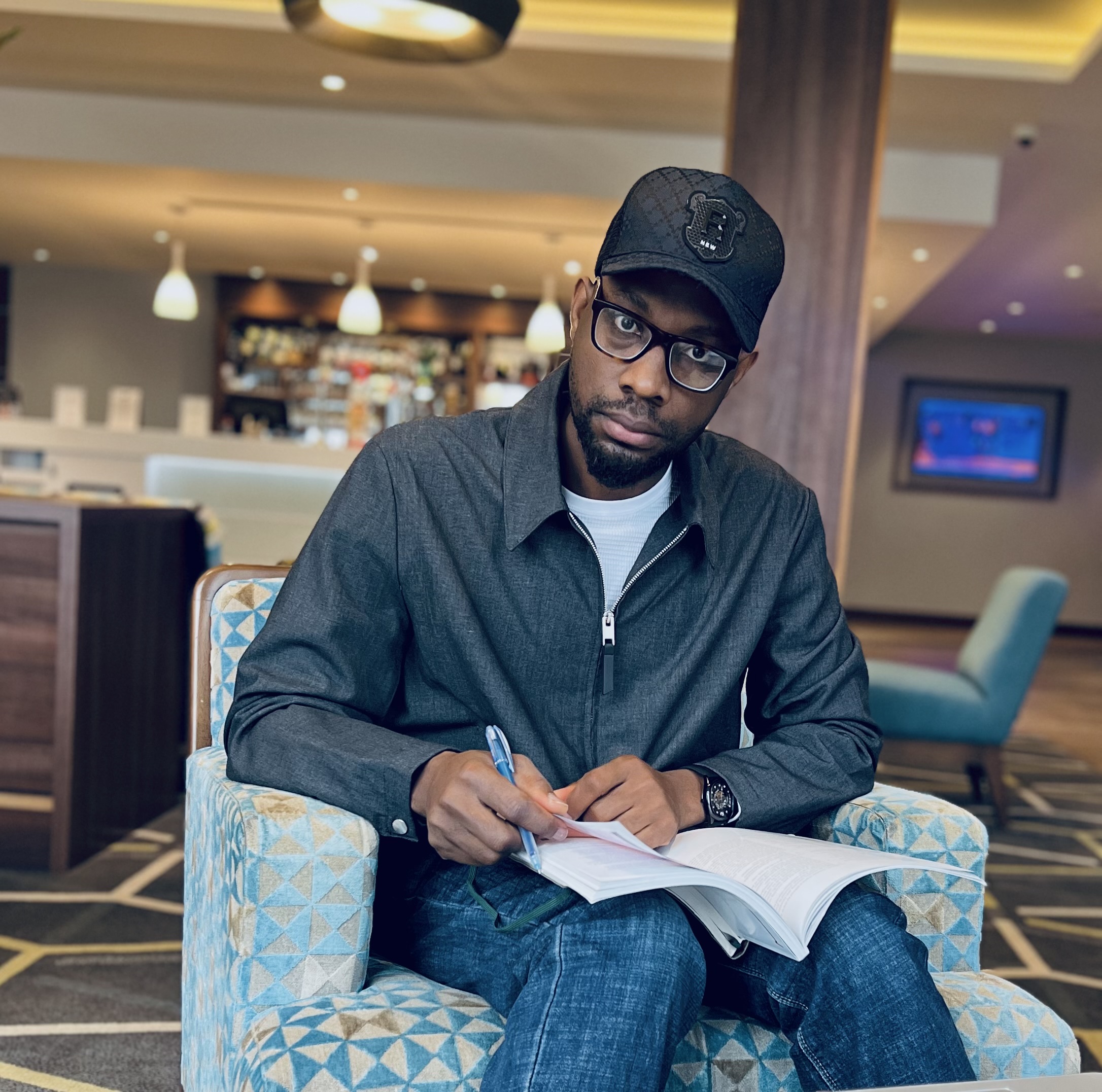
Life as a black AuDHD man.
Some days I wonder what it feels like to belong. Not simply to exist in a place, but to arrive somewhere and never once question whether I deserve to be there. I have spent so much of my life trying to find that feeling that I sometimes wonder whether it was ever meant for me. I have lived long enough to realise that loneliness is not the absence of people; it is the absence of being understood. There is a particular loneliness reserved for those who spend their lives explaining themselves, only to discover that nobody was really listening. It is a loneliness that does not shout. It whispers. It follows you quietly into every room until eventually it becomes your native language.
I often feel like I exist at the intersection of worlds that refuse to acknowledge one another. I am a black man from Nigeria. I live in the UK, a country that rightly prides itself on progress, equality and inclusion, yet I often feel as though I am watching those slogans from the other side of a glass wall. Then there is my neurodivergence, another layer of difference that transforms ordinary tasks into invisible battles. Each identity brings its own challenges, but together they create a life that often feels impossibly complex. It is like trying to play a game where everyone else knows the rules, yet insists there are no rules at all.
People romanticise strength because they have never had to depend on it every single day. They admire resilience without understanding that resilience is usually born from necessity, not choice. Nobody dreams of becoming resilient. Resilience is what remains after every easier option has been taken away. People praise those who carry heavy burdens but rarely ask why those burdens were never shared. Survival is celebrated far more often than it is understood.
As a Black man, I have grown accustomed to walking into spaces where I feel I must prove my competence before I have even spoken. Confidence is sometimes mistaken for arrogance. Passion is mistaken for aggression. Introversion is mistaken for ignorance or stupidity. There is a subtle but exhausting awareness that every mistake feels larger, every success feels smaller and every first impression carries a weight that others do not seem to carry. Whether or not every interaction is shaped by race, it often feels as though I am navigating a world where I have to work twice as hard simply to arrive at the same starting line.
When disability intersects with race, the idea of “inclusion” is conditional. The policies exist to reduce barriers for disabled employees, that tailored “reasonable adjustments” will level the playing field, however, I soon realised that, in practice, black disabled employees were an exception. My lived experience paints this story.
Trying to explain my experience and struggles is another invisible battle. It often feels as though the more articulate I become about my struggles, the less believable they seem. If I explain what overwhelms me, I worry I will be dismissed as making excuses. If I say nothing, everyone assumes I am coping. If I ask for adjustments, I fear becoming known as difficult. If I mask my difficulties well enough to survive, people naturally conclude that I never needed help in the first place. The better I become at hiding my struggles, the less anyone believes they exist.Sometimes I find myself looking around organisations that proudly display words such as diversity, inclusion and belonging, wondering where people like me fit into those promises.
My experience has often left me feeling that the support I hoped for was far more difficult to obtain than I expected. I cannot escape the feeling that I have repeatedly been required to justify needs that should simply have been understood. Whether that perception reflects every situation or not, it has shaped how I move through the world. When disappointment repeats itself often enough, it becomes difficult to approach the next opportunity without expecting more of the same. The hardest part is that racism here is so subtle you barely notice it until it destroys you in ways you would not have imagined possible. It is beautifully wrapped in politeness, it smiles. It thanks you for being open and honest. It assures you that your concerns have been heard before quietly returning everything to exactly the way it was behind your back. People imagine racism as doors being slammed in someone’s face. I my experience, it is the slow realisation that no one ever intended to open the door for you in the first place.
I wish I could say that home is different. Home is supposed to be the place where translation ends, where explanation is no longer necessary because someone knows your language before you speak it. Instead, I often find myself translating there too. My wife and I experience the world so differently that there are days when I wonder whether we are living inside entirely separate realities. I know she has her own pressures, her own exhaustion and her own perspective. I know relationships are built on two imperfect people trying to understand one another. Yet I cannot ignore the sadness I feel when I wonder whether the way my mind works is truly understood by the person whose understanding means everything to me. One of the greatest battles of my life happens before most people have even started their day. For me, morning is not simply the beginning of the day, leaving my bed is the singular most difficult thing there is for me. There are mornings when my body feels anchored to the bed by something I can only describe as supernatural, I cannot even explain. Hunger alone is not enough to move me. If left unmotivated, I will twist and turn till late afternoon, so hungry and energy so depleted completely that my body begins to shake. At this stage, it takes me several days, not hours, to reach full recovery. What may see like simple tiredness or fatigue from the outside is a kind of force greater than anything I can explain. That is why something as ordinary as a very early breakfast means so much more to me than food. Two softly boiled eggs are not simply two eggs. They represent routine, predictability and enough fuel to help kick start my brain and my body to begin engaging with the world. They represent the difference between starting the day and losing it before it has even begun. To someone else, it might seem like an unnecessarily specific request. To me, it is one small piece of a fragile system that keeps everything else standing. People often mistake specificity for fussiness. They do not realise that what looks like preference is often a carefully constructed strategy for survival.
When that need is not understood, or when I feel unheard, I find myself caught between confusion and guilt. I question whether I have failed to explain myself clearly enough. I question whether I am asking for too much. I question whether I am expecting understanding that another person simply does not know how to give. The uncertainty can be more painful than the disagreement itself because uncertainty leaves the mind searching endlessly for answers that never come.
Outside my home, I often discover that the place where I expected understanding is equally complicated. Among many people within my own community, conversations about neurodivergence are frequently met with scepticism or dismissal. Some see it as weakness. Some believe it is simply another fashionable label. Others insist that everyone is a little neurodivergent, as though recognising everyone’s humanity somehow erases the unique challenges that some people face every day. What is intended as reassurance often feels like minimisation. There is a profound difference between saying, “I understand,” and saying, “Everyone is like that.” One invites compassion; the other quietly dismisses suffering. The greatest tragedy is not that I am different. The greatest tragedy is how much of my life has been spent convincing people that my differences deserve to be understood rather than corrected. I do not want pity. I do not want lower expectations. I do not want my challenges to become my identity. I simply want the opportunity to live in a world where understanding arrives before judgement, where curiosity replaces assumption and where difference is met with wisdom instead of suspicion.
Despite everything, I cannot abandon hope. Somewhere beneath the exhaustion, beneath the misunderstanding and beneath the endless translation, there remains a quiet conviction that my life has purpose. Perhaps my differences were never meant to isolate me but to help me see what others overlook. Perhaps the years I have spent feeling like an outsider have taught me how to notice those who are standing alone. Perhaps the fortress I have built around myself was never intended to become a prison but a place from which I could one day build bridges for others.Until that day comes, I continue walking. Not because the road has been kind, but because every mile has taught me something about endurance, compassion and the extraordinary cost of being unseen. My greatest hope is not that the world will one day celebrate people like me. It is something much simpler than that. I hope that one day we will no longer have to spend our lives convincing people that our way of existing is worthy of understanding.

 DIVERGENT CORNER
Leave a comment